
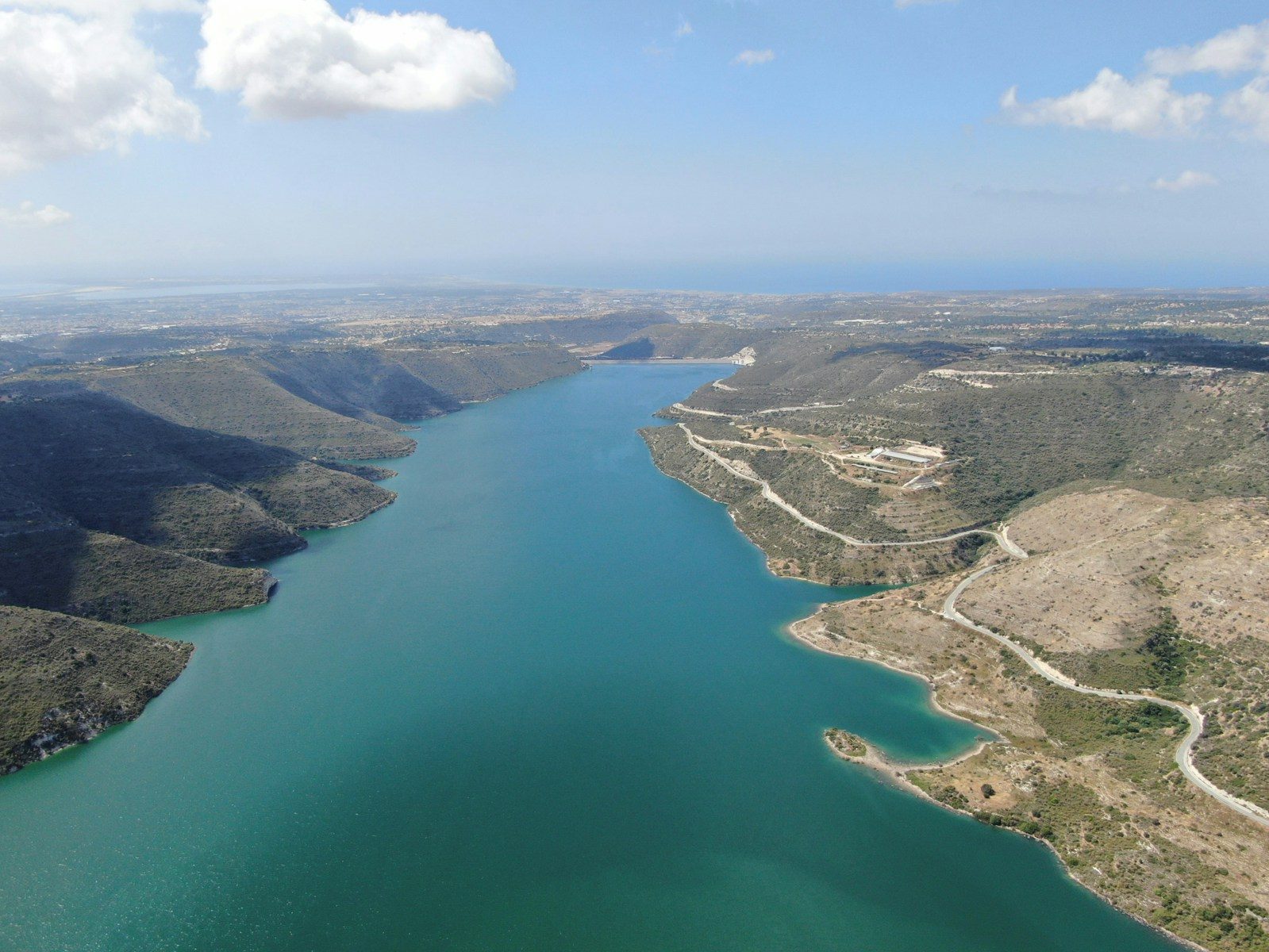
Water security is becoming one of the most pressing challenges in the Eastern Mediterranean. This article explores the region’s growing water pressures, the role of science-led solutions, and why integrated water and energy planning is essential for long-term resilience.
Across the Eastern Mediterranean, water is no longer a stable or predictable resource. Changing climate patterns, increasing demand, and environmental pressures are reshaping how countries, industries, and communities approach water management.
For regions such as Cyprus and its neighbouring countries, water security is not only an environmental concern. It is a strategic priority that affects economic stability, agriculture, infrastructure, and quality of life.
At EASTMED Weather & Environment Solutions Ltd, water security is approached through science-led solutions, regional understanding, and integrated planning.
Understanding Water Pressure in the Region
The Eastern Mediterranean is characterised by naturally limited freshwater resources. However, this baseline challenge is becoming more complex due to:
- Reduced and less predictable rainfall
- Longer and more frequent drought periods
- Increasing water demand from agriculture, tourism, and urban development
- Pressure on underground aquifers and reservoirs
These factors are not isolated. They interact in ways that amplify risk, making traditional water management approaches less effective over time.
Water scarcity is therefore not only about availability. It is about variability, timing, and long-term sustainability.
Moving Beyond Single Solutions
No single solution can address water scarcity in the region. Instead, a combination of approaches is required, supported by scientific understanding and careful planning.
Key components of a modern water security strategy include:
Rainfall Enhancement and Atmospheric Intervention
Cloud seeding and rainfall enhancement can support water resource management by increasing the efficiency of natural precipitation under suitable conditions. These approaches are part of a broader atmospheric science framework and must be applied responsibly and based on meteorological data.
Meteorology and Weather Forecasting
Accurate weather forecasting and meteorological observation support better decision-making across sectors. From agriculture to infrastructure planning, reliable data allows for more efficient use of available water resources.
Desalination
Desalination provides a stable source of water in regions with limited freshwater availability. However, it is energy-intensive and should be considered within a broader system that includes energy planning and sustainability considerations.
Renewable Energy Integration
Linking water production with renewable energy sources, such as solar power, can improve the long-term sustainability of desalination and other water-related processes.
Drought Management and Strategic Planning
Effective drought management requires preparation, monitoring, and coordinated response strategies. Long-term planning is essential to reduce vulnerability to recurring dry periods.
The Importance of Integrated Water and Energy Planning
In the Eastern Mediterranean, water and energy are closely connected. Producing, transporting, and treating water requires energy, while energy production itself often depends on water.
This interconnection means that water security cannot be addressed in isolation. Instead, it must be part of a broader strategy that considers:
- Energy availability and sustainability
- Infrastructure resilience
- Environmental impact
- Long-term resource efficiency
Integrated planning helps ensure that solutions are not only effective in the short term, but also sustainable over time.
A Regional Perspective
Water challenges do not stop at national borders. Countries across the Eastern Mediterranean face similar pressures, including Cyprus, Greece, Israel, Egypt, Lebanon, Syria, and Jordan.
This shared reality creates opportunities for:
- Knowledge exchange
- Regional cooperation
- Coordinated environmental strategies
- Shared technological approaches
Positioned in Cyprus, EASTMED operates with a regional perspective, recognising that long-term resilience depends on collaboration as much as innovation.
Water security in the Eastern Mediterranean is becoming increasingly complex. Addressing it requires more than isolated interventions or short-term measures.
A science-led, integrated approach—combining meteorology, rainfall enhancement, desalination, renewable energy, and strategic planning—offers a more sustainable path forward.
As climate pressures continue to evolve, the ability to manage water resources effectively will play a defining role in the region’s resilience, stability, and long-term development.